
Should I rent or buy a mobile office?
Renting usually fits a defined project or uncertain timeline; buying can make sense for long-term or repeated use when the owner can manage transport, storage and maintenance.
Read the answer →46 MOBILE OFFICE BUYER ANSWERS
Use each answer as a practical decision page, then follow its inline paths to the right trailer, modular building, guide or quote request.
Popular starting points: office trailer cost, renting versus buying, common office trailer sizes, portable classroom rent and current mobile office prices.
THE COMPLETE ANSWER LIBRARY
Size guides and decision answers are deliberately mixed so a buyer can move from early research into a pricing-ready scope.

Renting usually fits a defined project or uncertain timeline; buying can make sense for long-term or repeated use when the owner can manage transport, storage and maintenance.
Read the answer →
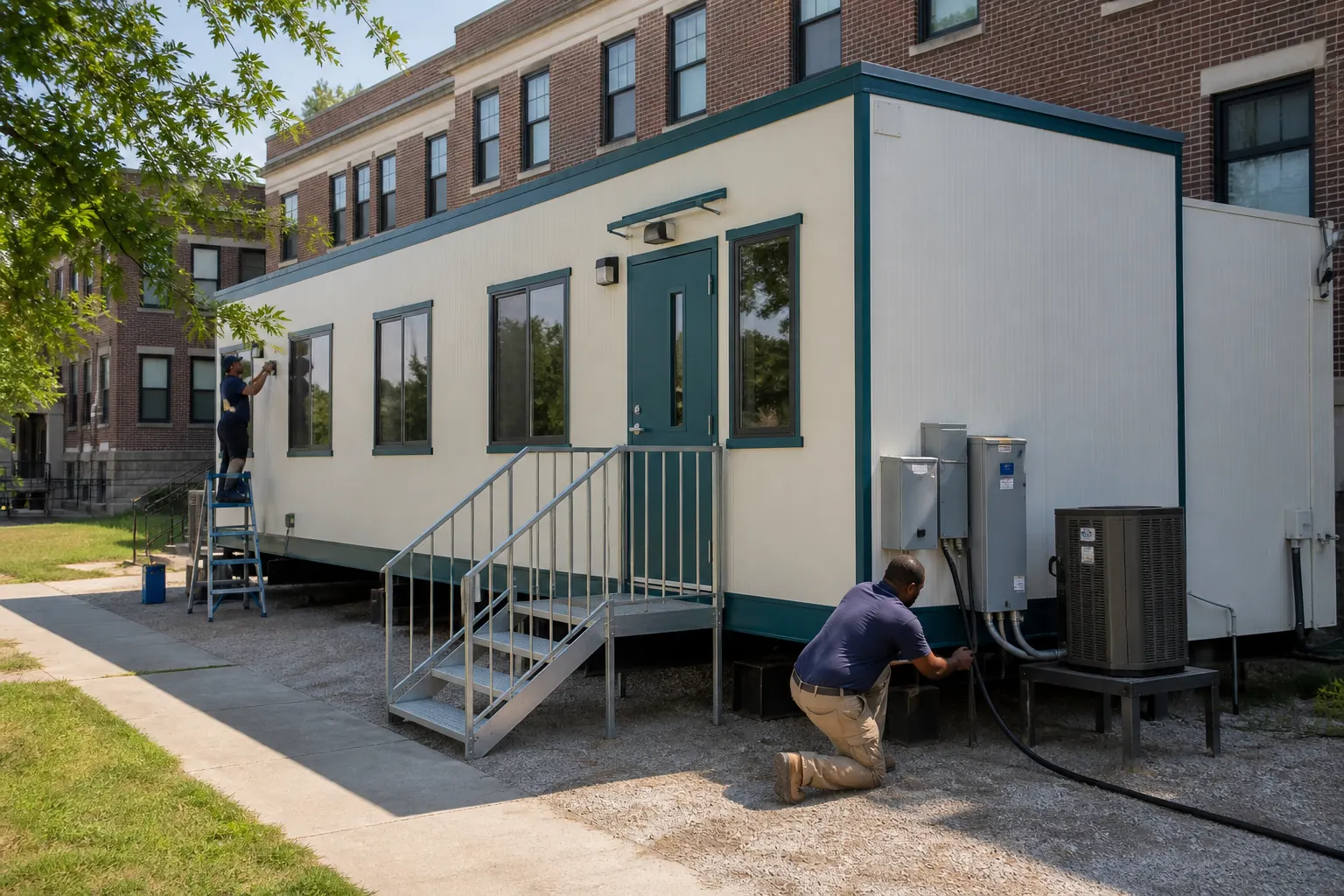
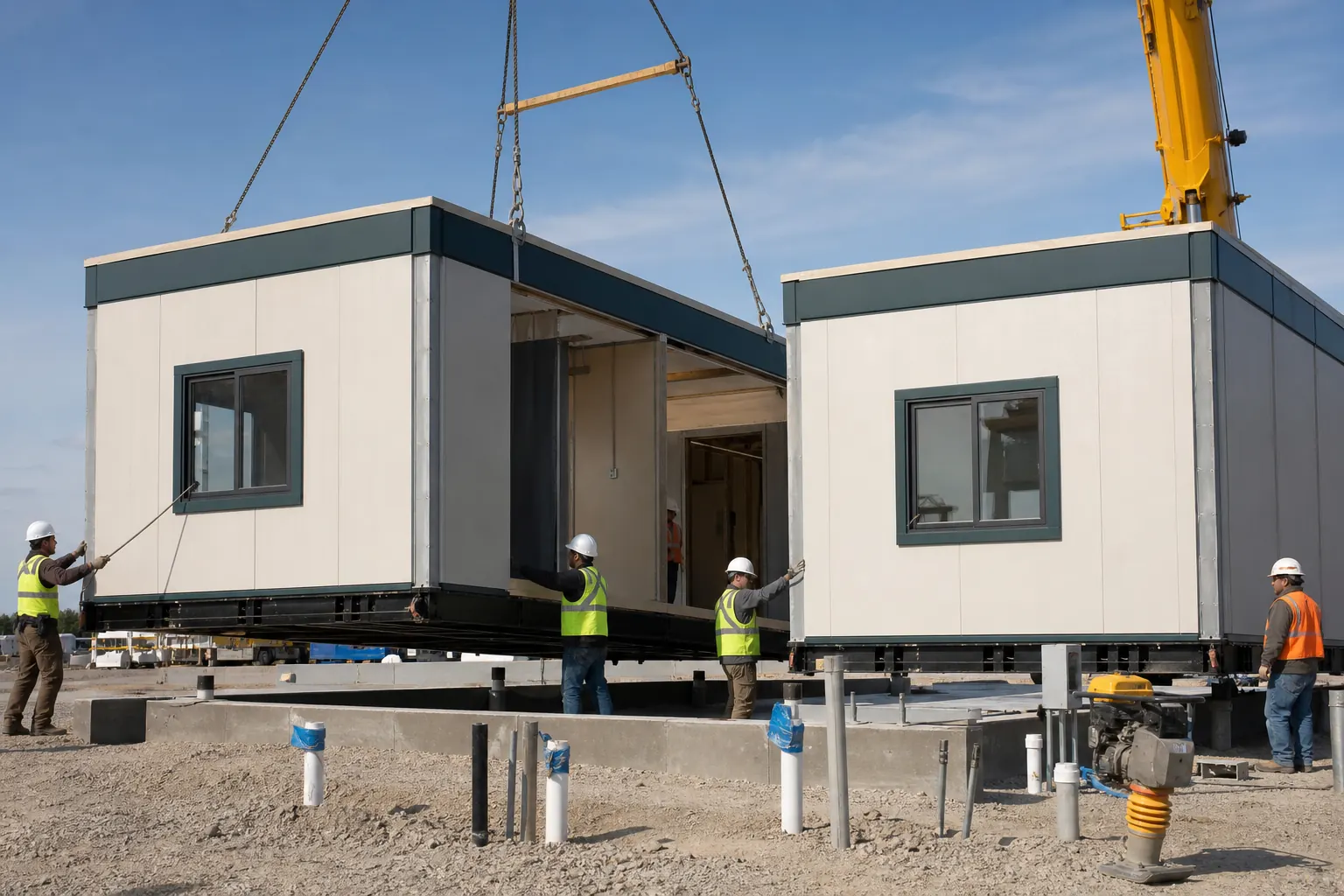
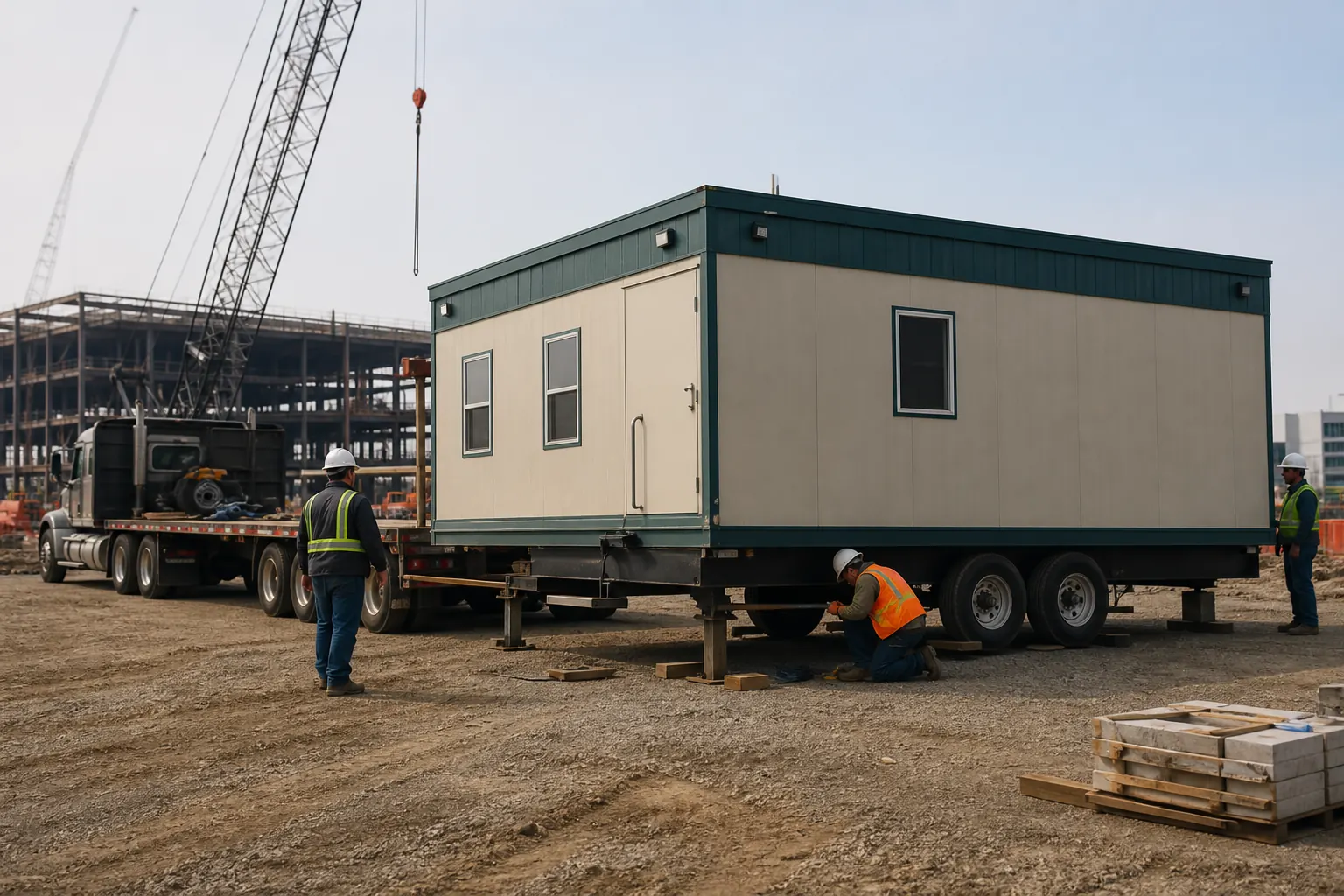
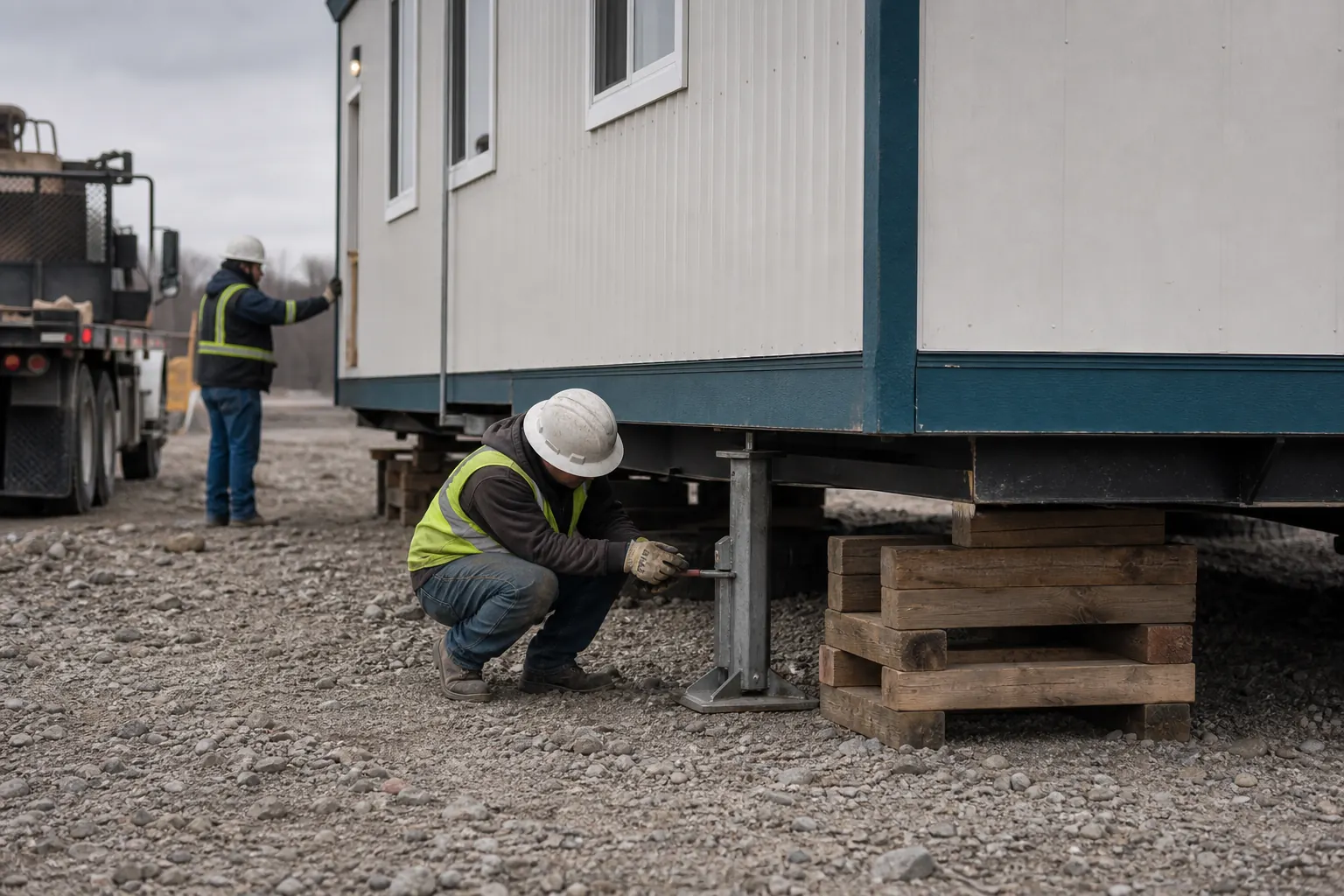
A carrier transports the unit to a prepared location, positions it, then the responsible crew blocks, levels and anchors it before access and utility work are completed.
Read the answer →
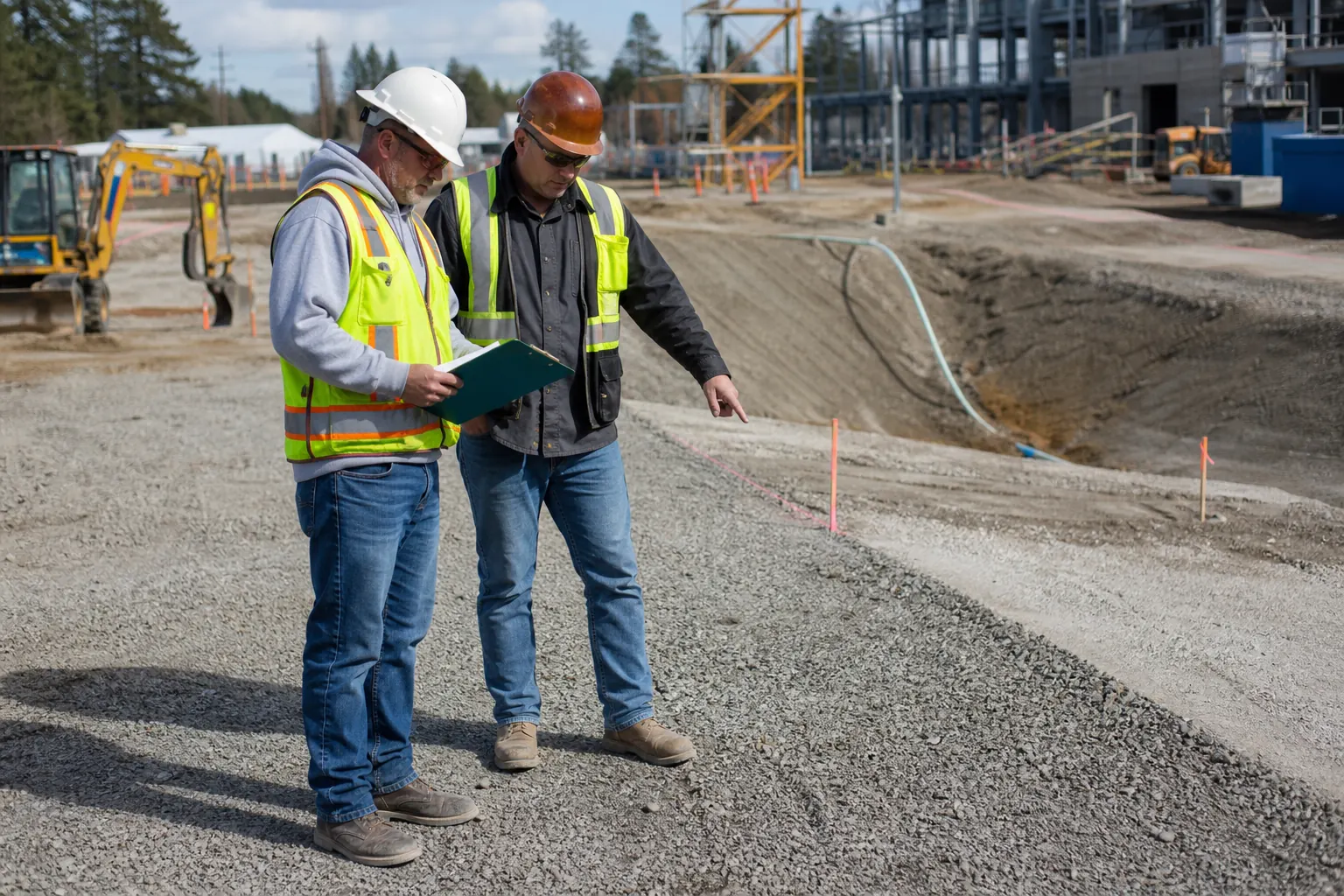
Most mobile offices need a stable, reasonably level and well-drained placement area plus safe delivery access, utility routes and room for required stairs or ramps.
Read the answer →
Permit requirements vary by jurisdiction, duration, use, utilities and occupancy; buyers should confirm the local path before delivery rather than treating a temporary unit as automatically exempt.
Read the answer →
Lead time depends on local inventory, trailer size, floor plan, features, transport distance, site readiness and approvals; an in-stock standard unit can move faster than a customized office.
Read the answer →
A complete quote should identify the unit, condition, layout, features, term, delivery, setup, access equipment, recurring charges, service responsibilities and pickup assumptions.
Read the answer →
Most offices require electrical service and often data; restroom-equipped or specialized units may also need water, sewer or holding-tank service sized for the actual occupancy.
Read the answer →
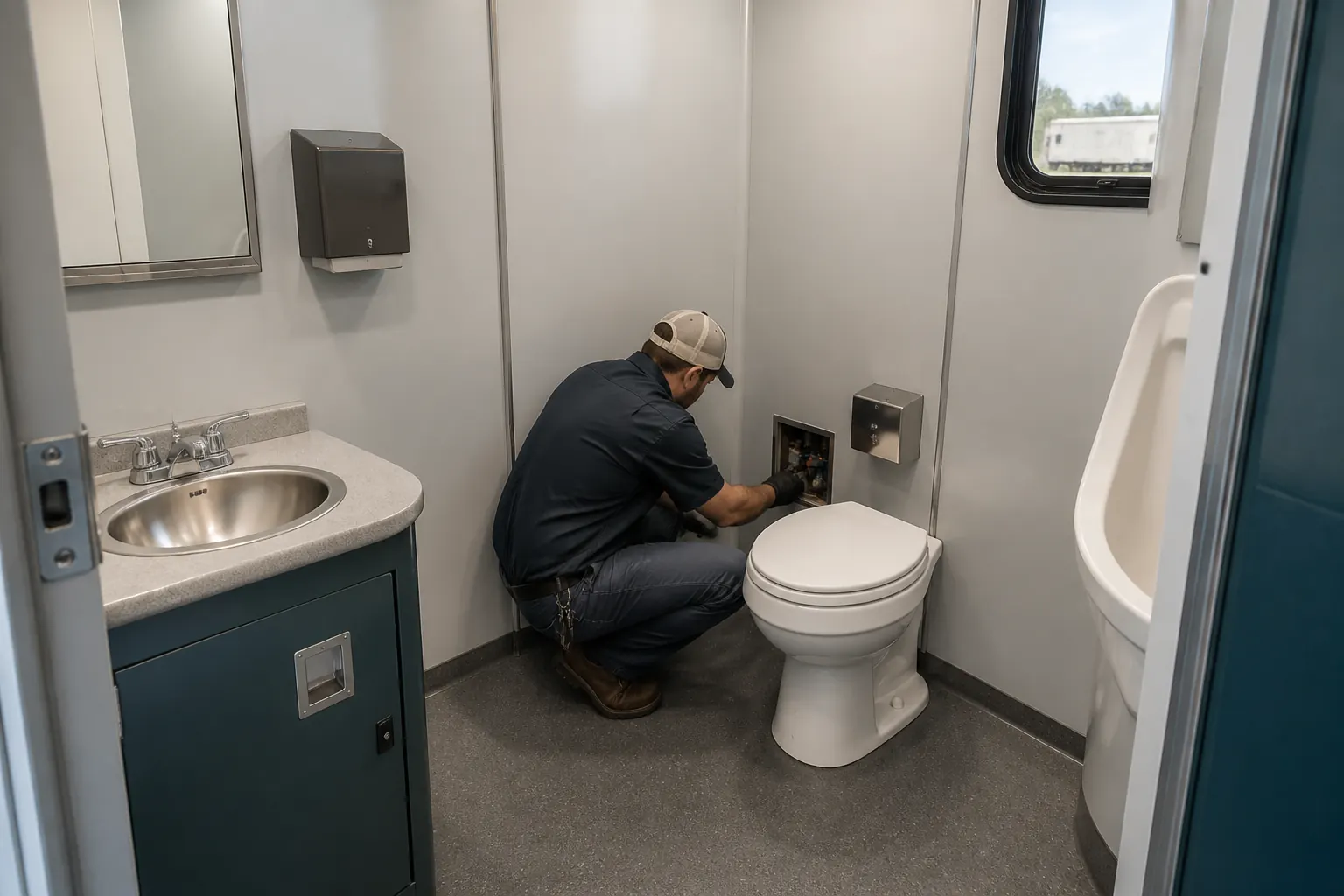
Restroom office trailers either connect to site water and sewer or use fresh-water and waste tanks that require capacity planning, freeze protection and regular service.
Read the answer →
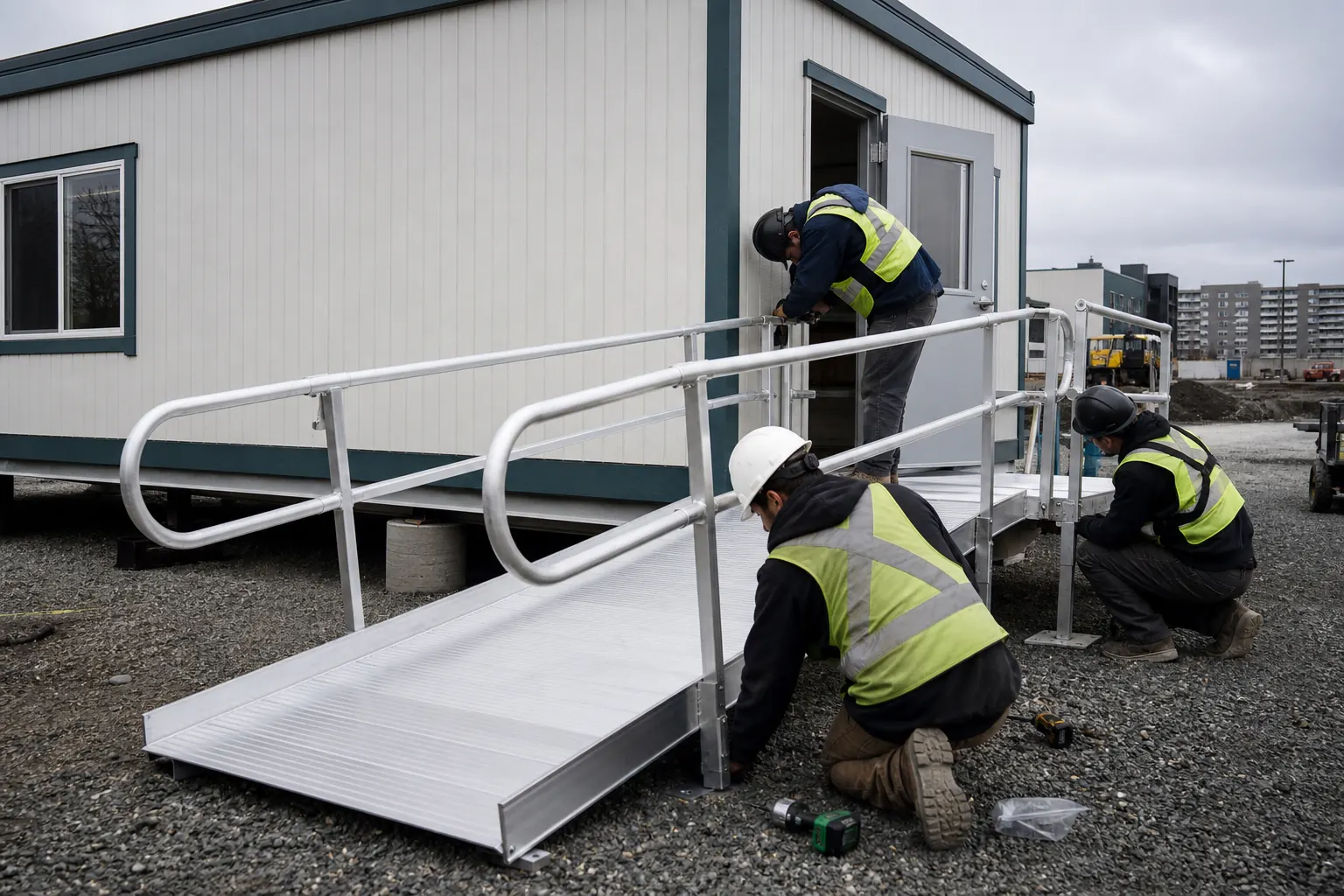
Every elevated mobile office needs safe access, while the required mix of stairs, landings, ramps and accessible routes depends on the use, users, site and governing requirements.
Read the answer →
Minimum terms vary by provider, market, unit and project; compare the committed period, extension rate, early-return rules and pickup timing before choosing a rental.
Read the answer →
Requirements vary by provider and project, but renters commonly need coverage for the unit, liability arising from its use and site risks throughout delivery, occupancy and pickup.
Read the answer →
The agreement should divide provider maintenance, tenant housekeeping, utility problems and damage repairs, then explain how service is requested and how quickly urgent problems are addressed.
Read the answer →
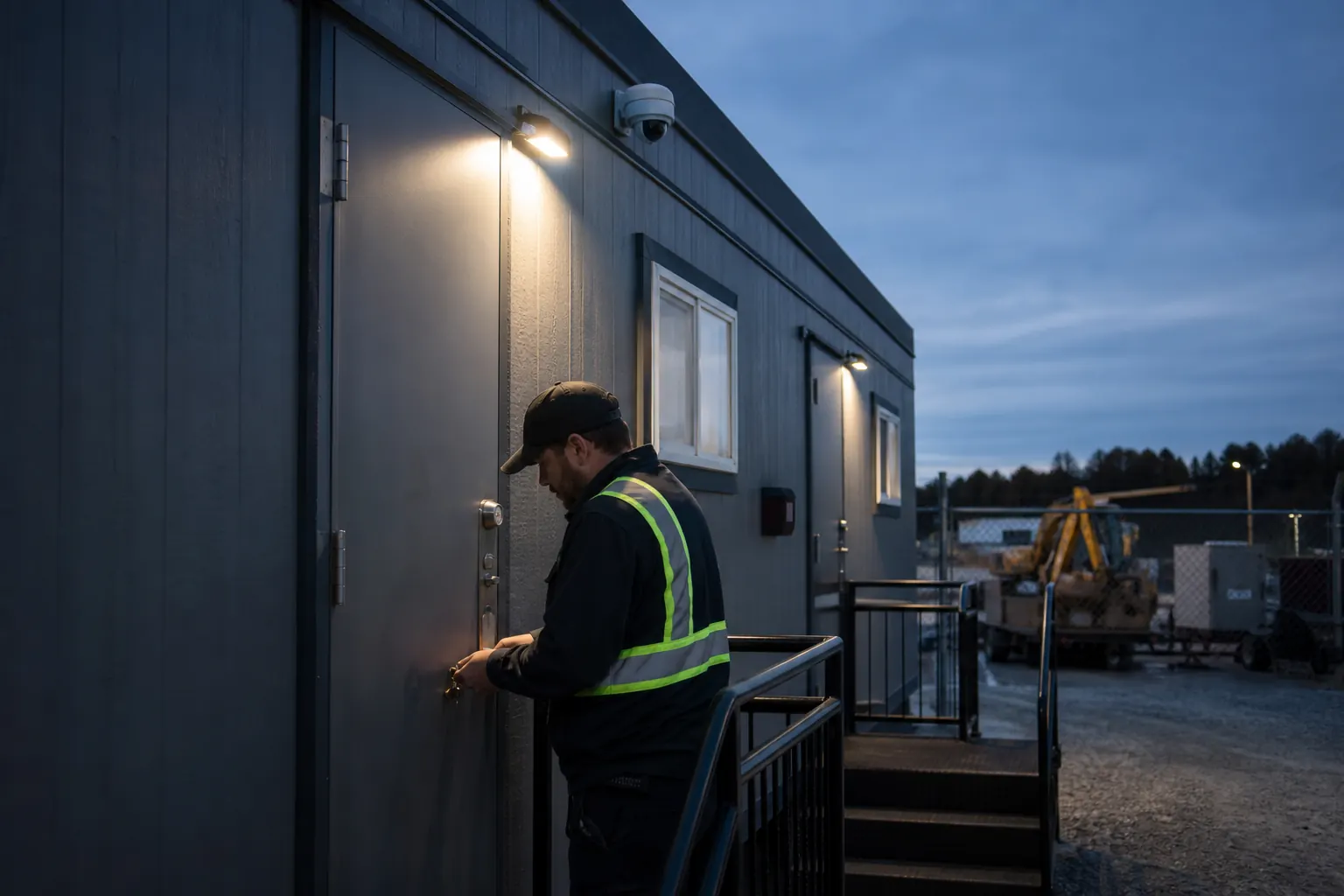
A mobile office can be secured effectively when its doors, windows, locks, lighting, placement and operating procedures are chosen for the property rather than accepted as generic trailer features.
Read the answer →
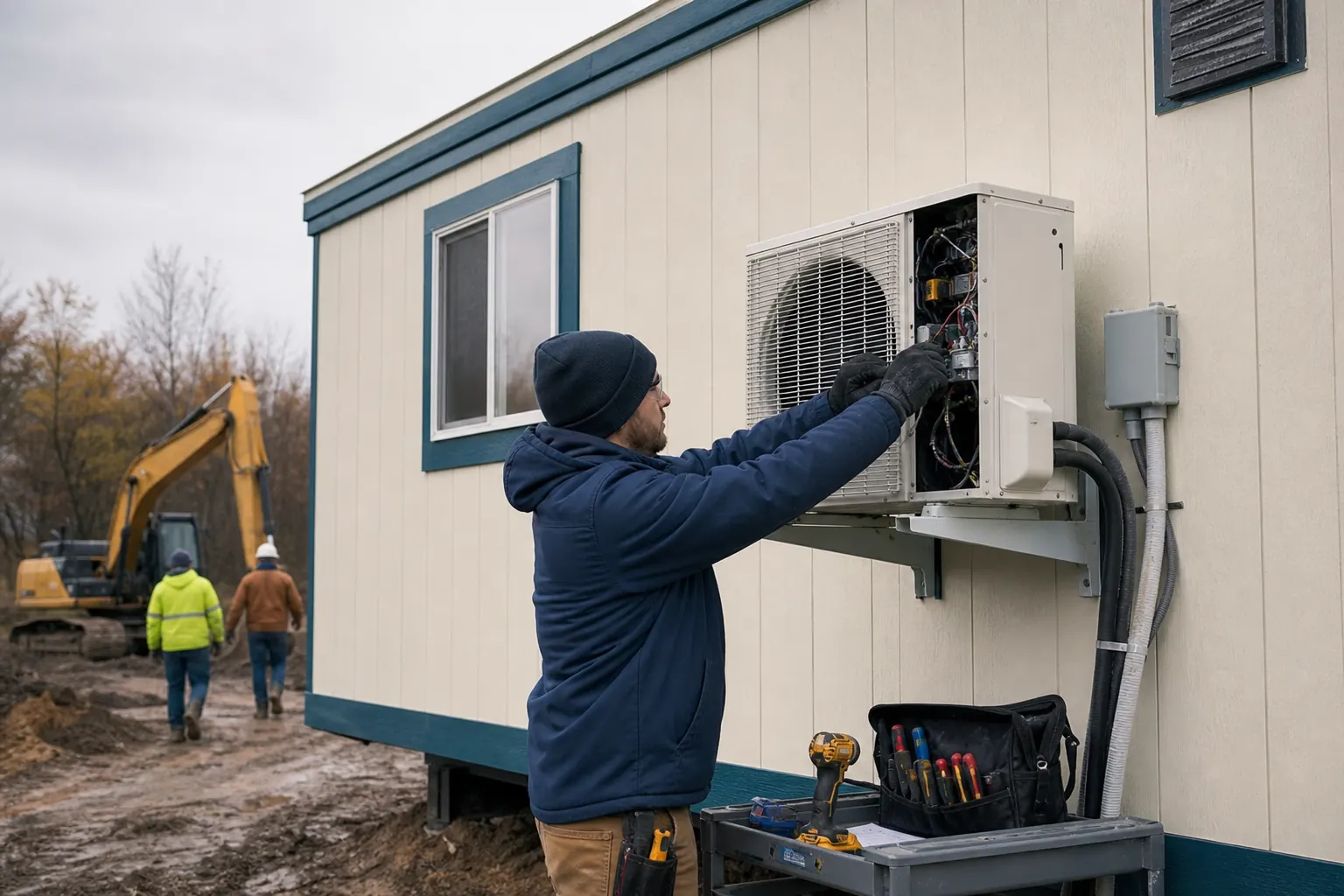
Mobile offices use packaged or split HVAC equipment sized for the unit, while climate performance also depends on insulation, door traffic, occupancy, electrical capacity and cold-weather plumbing protection.
Read the answer →
New units offer specification control and a clearer service history, while used trailers can reduce initial cost and lead time when condition, layout and relocation requirements fit the project.
Read the answer →
Useful capacity depends on the floor plan, furniture, circulation, meetings, storage, restroom space and applicable occupancy requirements, not square footage alone.
Read the answer →
An office trailer is typically a towable single unit suited to fast temporary deployment, while a modular building can combine factory-built sections into a larger, more permanent-feeling facility.
Read the answer →
Many office trailers can be relocated, but each move requires provider approval, safe disconnection, a suitable route, a prepared new pad and renewed setup or inspection work.
Read the answer →
An extension normally continues at the contract rate or a stated holdover rate, but availability, notice rules and scheduled pickup can affect whether the unit may remain.
Read the answer →
Ask about the actual unit, availability, complete installed scope, site assumptions, service response, contract terms and pickup before choosing a supplier.
Read the answer →
A 14×45 trailer gives teams a wider interior than many standard single-wides while remaining one transported office unit.
Read the answer →
A 12×44 office trailer balances usable workspace, meeting capacity and a footprint that fits many construction and business properties.
Read the answer →
A 24×56 modular office combines sections into a broad temporary or relocatable facility with room for departments, meetings and support space.
Read the answer →
A 12×60 trailer provides substantial linear workspace for teams that need several rooms without the setup of a double-wide.
Read the answer →
A 12×32 office provides more usable width than many narrow jobsite trailers while keeping length manageable on constrained properties.
Read the answer →
A 24×44 double-wide creates a broad floor plate for coordinated teams, private rooms and shared meetings.
Read the answer →
A 10×32 mobile office gives a small team room for focused work and short coordination meetings without claiming a large portion of the site.
Read the answer →
A 10×50 trailer adds useful length for multiple work zones while retaining the familiar delivery and setup pattern of a single-width unit.
Read the answer →
An 8×36 office trailer extends working length while preserving a narrow footprint for jobsites and yards where width is limited.
Read the answer →
An 8×20 office trailer is a compact field workspace for one or two regular users, records, check-in or a small site-management function.
Read the answer →
A 12×56 office gives a project several distinct work zones without requiring a multi-section installation.
Read the answer →
An 8×28 trailer offers a little more working and storage room than the smallest field offices while remaining easy to place along many site edges.
Read the answer →
A 24×60 multi-section office provides a substantial temporary facility for complex projects, schools and business operations.
Read the answer →
A 28×70 modular office creates nearly building-scale temporary space for a major team or public program.
Read the answer →
Portable classroom rent depends on size, configuration, term, local inventory, delivery, foundation, access, utilities, code work and the condition of the actual unit.
Read the answer →
An 8×24 office trailer creates a simple protected workspace close to field activity, check-in or a temporary customer point.
Read the answer →
A 10×44 mobile office offers enough length for several desks, a meeting area and optional private room while retaining a single-wide footprint.
Read the answer →
A 10×36 office trailer gives small and midsize teams a workable balance of desks, coordination space and manageable site footprint.
Read the answer →
An 8×32 mobile office is a familiar jobsite size for a small team that needs desks, files and brief meetings close to active work.
Read the answer →
Office trailer cost varies with size, age, condition, layout, rent or purchase, local inventory, transport, setup, access equipment, utilities, service and term.
Read the answer →
A 28×74 modular building supports a broad temporary workplace with several departments, classrooms or public functions.
Read the answer →
The 12×60 large office trailer is a single-wide choice for projects needing several working zones and meaningful meeting capacity.
Read the answer →
The 8×24 small office trailer puts a focused workplace on constrained sites without carrying unused rooms.
Read the answer →
Common mobile office sizes range from compact 8×20 units through long single-wides and large double-wide modular offices; the right size comes from people, rooms, circulation and site access.
Read the answer →
The 8×32 small mobile office gives a lean field team more desk and file space than the shortest jobsite units.
Read the answer →
The 10×50 large office trailer supports a medium team with separate work, meeting and storage functions in one transported unit.
Read the answer →