
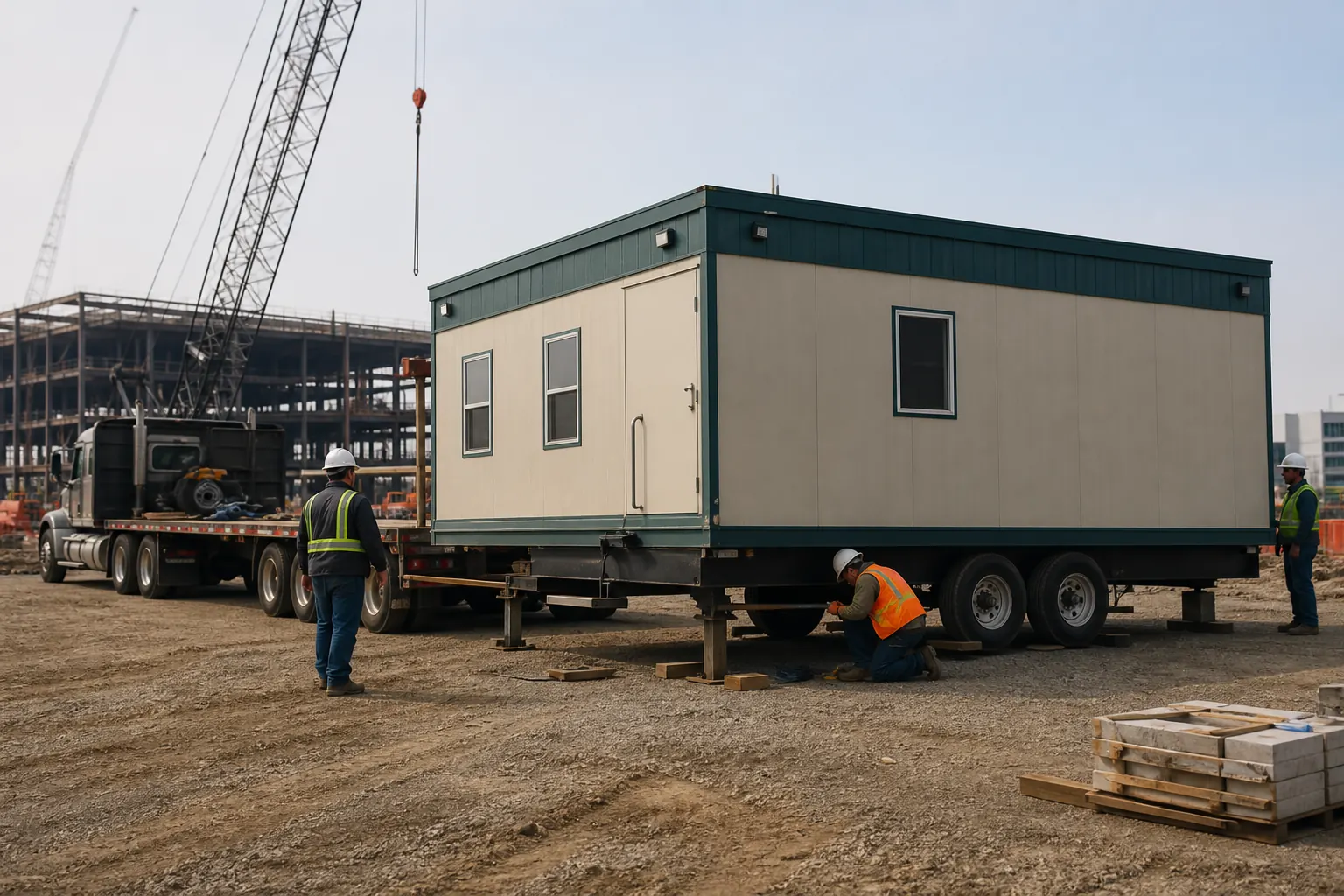
Many office trailers can be relocated, but each move requires provider approval, safe disconnection, a suitable route, a prepared new pad and renewed setup or inspection work.
Plan the second placement before the first delivery
If a project will advance across a large site, identify likely future pads, access routes and utility strategies. Avoid placing permanent work where the trailer or carrier will later need to move.
Compare the same office and site scope.
Give every supplier the real ZIP, use, size range, term, delivery date and setup responsibilities.
Use qualified crews for disconnection and transport
Utilities, steps, ramps, anchoring and blocking must be removed safely. The provider may restrict who can tow or reposition its equipment, even for a short move within the property.
Carry relocation as a priced option
Ask for estimated move, setup and downtime costs in the original office trailer rental quote. A planned relocation is easier to budget than an urgent field request after work blocks the first location.
Turn this answer into a useful supplier comparison
Record the decision that applies to the property, who owns it and when it must be complete. Connect that note to the proposed unit, delivery plan, access equipment, utilities, service and removal so an unanswered assumption does not return later as a change in price or schedule.