
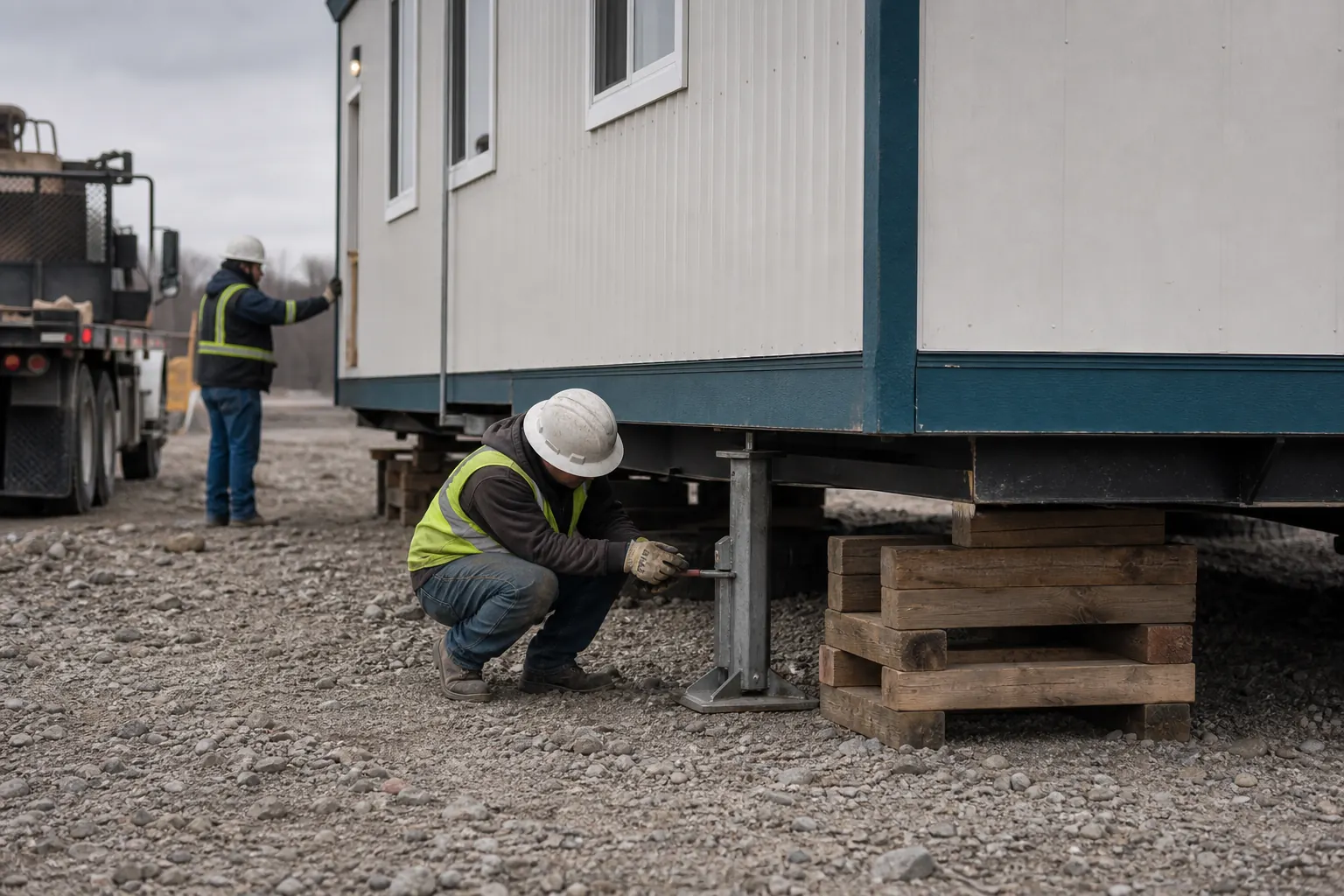
A carrier transports the unit to a prepared location, positions it, then the responsible crew blocks, levels and anchors it before access and utility work are completed.
Delivery starts with a verified route to the exact placement point
The carrier needs more than a street address. Confirm gate width, turning room, surface capacity, overhead clearance, grades and the ability to leave after unloading. Photograph difficult approaches and identify who can direct the driver on arrival.
Compare the same office and site scope.
Give every supplier the real ZIP, use, size range, term, delivery date and setup responsibilities.
Setup creates a stable and usable office
The unit is positioned, blocked and leveled according to the provider and local requirements. Anchoring or tie-downs may follow. Steps, landings or ramps are installed, then power, data, water and waste are connected where required.
Put every setup responsibility in the proposal
Ask who supplies the foundation or pad, blocking, anchoring, access equipment, utility connections and inspections. A complete office trailer quote should state what happens on delivery day and what the property must finish before occupancy.
Turn this answer into a useful supplier comparison
Record the decision that applies to the property, who owns it and when it must be complete. Connect that note to the proposed unit, delivery plan, access equipment, utilities, service and removal so an unanswered assumption does not return later as a change in price or schedule.