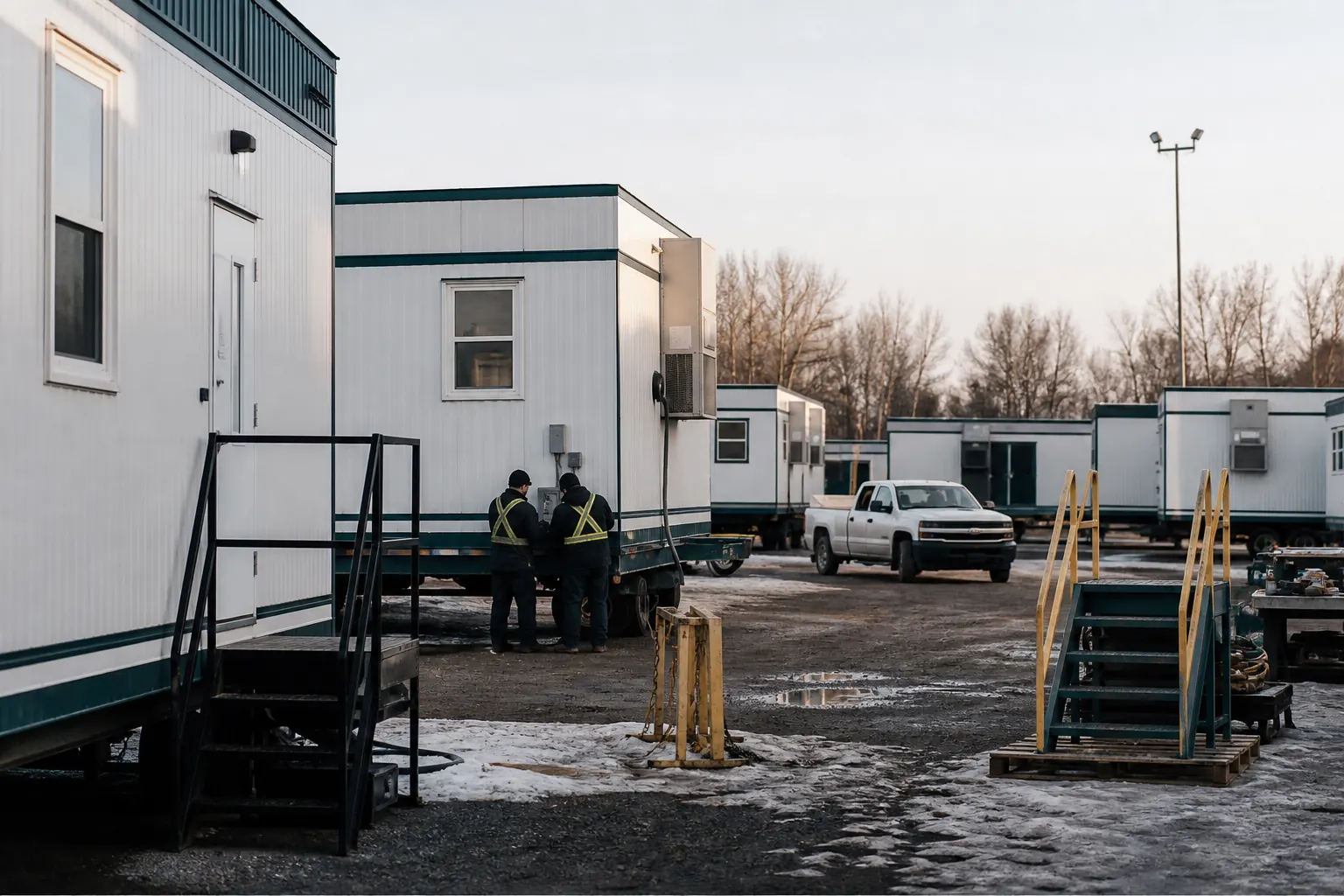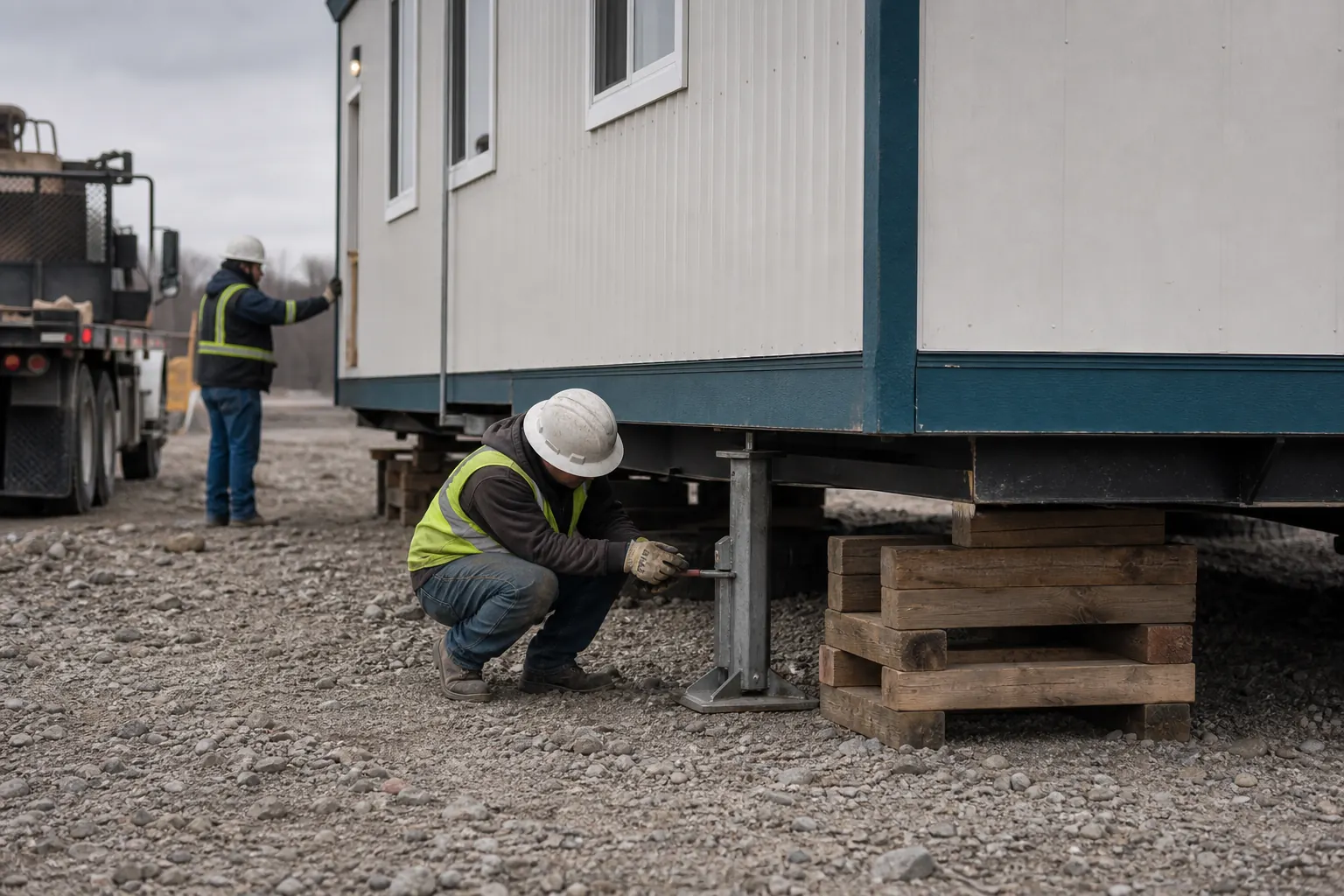
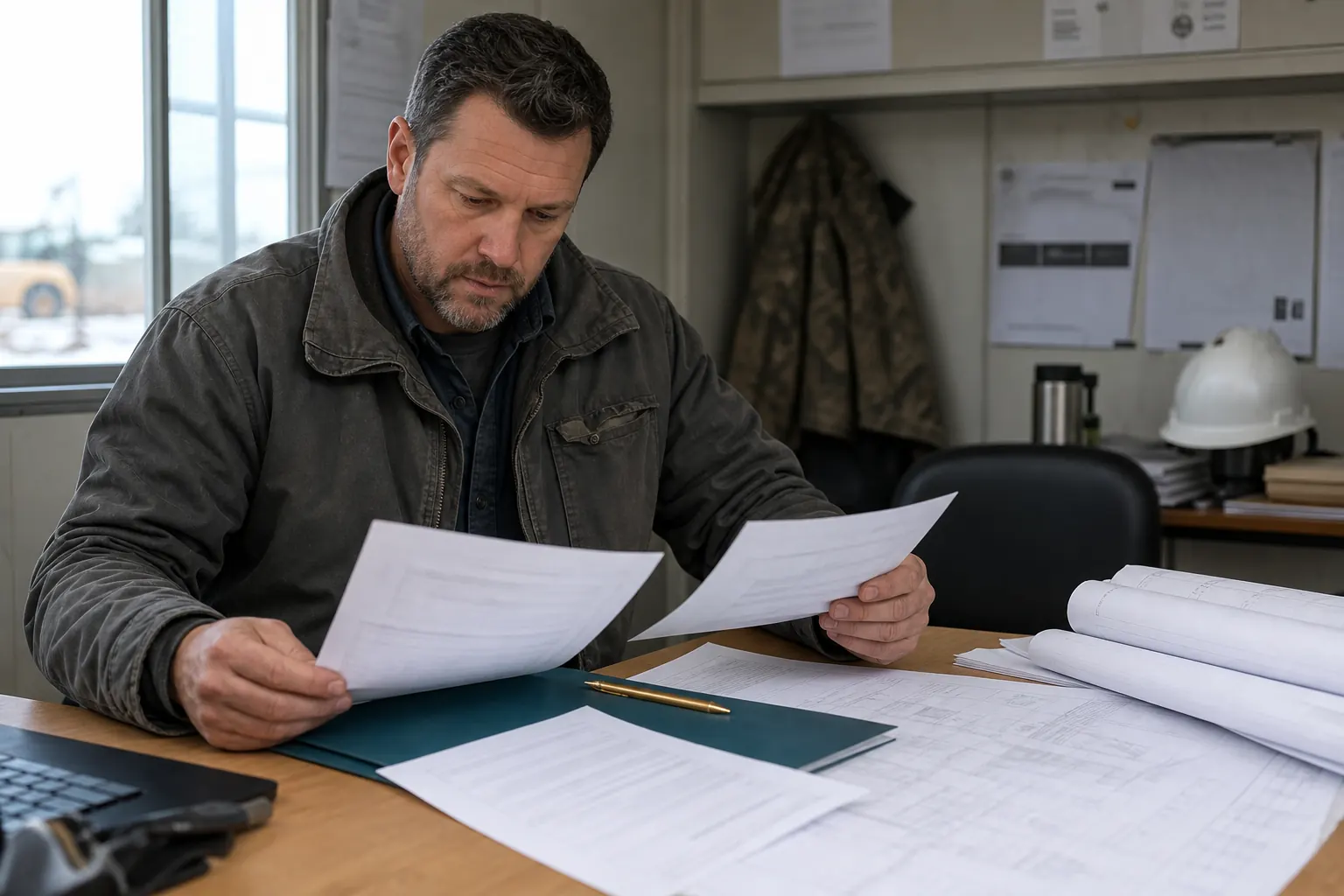
Minnesota mobile offices support construction, manufacturing, healthcare, schools, agriculture, utilities and temporary business operations through humid summers and severe winters.
STATE BUYER BRIEF
Minnesota Construction Office Trailers for Year-Round Work
A field office must protect people, plans, electronics and records while remaining reachable through snow and changing site phases. Compare construction office trailers by peak crew use, meeting space, storage and entry. Reserve room for plowing and snow storage without blocking stairs, ramps, HVAC equipment or the carrier path needed for eventual pickup.
Portable Classrooms and Temporary Business Offices
School renovations, enrollment changes, training and facility work can require portable classrooms or finished office space. Identify students, staff, visitors, accessibility, furniture, technology and restroom needs. A public or education building should be matched to occupancy and circulation rather than treated as a cosmetically improved construction trailer.
Specify Minnesota Heat, Plumbing and Winter Site Care
Review heating capacity, envelope condition, vestibule or door exposure and electrical demand for the occupied schedule. Restroom units need protected lines, tanks or connections and a clear shutdown procedure. Confirm who handles snow, ice, monitoring and urgent service. The guide to mobile office winterization helps turn those concerns into quote requirements.
Compare Delivered Minnesota Mobile Office Prices
Require the offered unit, source, condition, freight, setup, stairs or ramp, winter package, utilities, rent, service and pickup. Compare proposals over the realistic term, including possible extensions. A complete Minnesota mobile office price request prevents a low monthly amount from obscuring missing cold-weather work or a distant service plan.
Prepare Minnesota Mobile Offices for Winter Occupancy and Spring Pickup
Minnesota buyers should look beyond the delivery date and plan for the hardest operating week. Confirm insulation, heating capacity, vestibule or entry needs, plumbing protection and the electrical service required during deep cold. Snow storage and plow routes must not block stairs, ramps, HVAC equipment or the carrier’s eventual pickup path. A unit placed on frozen ground may also need a spring inspection as conditions change. Construction, education and manufacturing users should specify records, meetings, technology and peak occupancy. That fuller brief helps suppliers match a building that remains functional through the season instead of quoting a shell that merely fits the available footprint.
Give suppliers one complete address-specific brief.
Include ZIP, use, term, people, features, access, ground and target delivery.